
Renters and apartment dwellers
You don’t need a roof to go solar. You need an outlet.
Lightweight panels you take with you when you move. Load Guard connects at the in-unit breaker panel most modern apartments have, so just ask your landlord.

About CraftStrom
CraftStrom brought plug-in solar technology to the United States for people who cannot—or simply do not want to—put panels on a roof. Since 2017, we have built plug-in solar systems designed to make home solar simpler, more accessible, and easier to understand.
Products
Start with the setup that fits your home, available space, and daytime electricity goals. Every CraftStrom system is designed to be understandable, expandable, and supported.
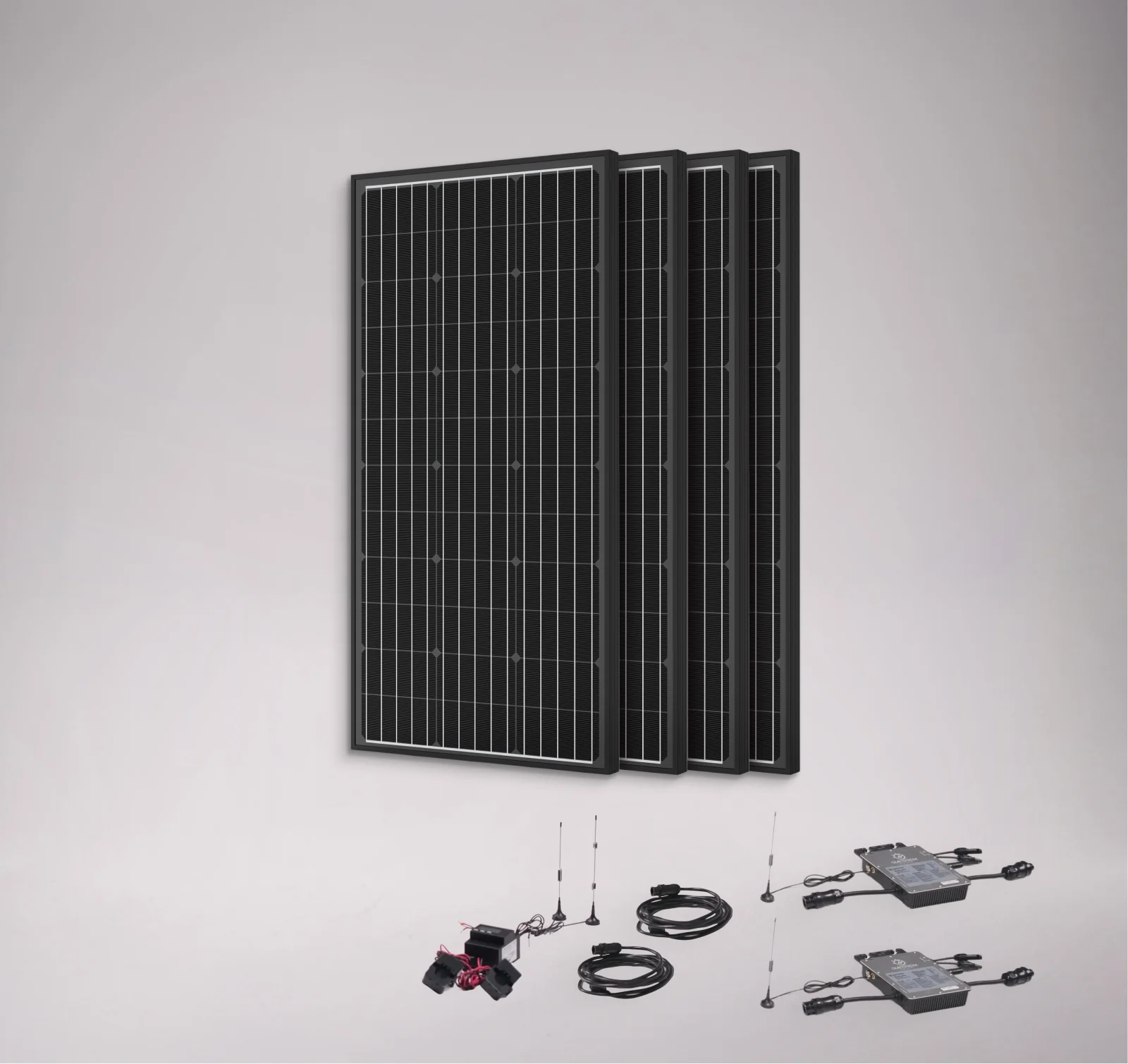
800 W Eco-Line Kit
$1,500
A practical first step into plug-in solar.

2,000 W Premium Kit
$4,618
More output from bifacial glass panels.
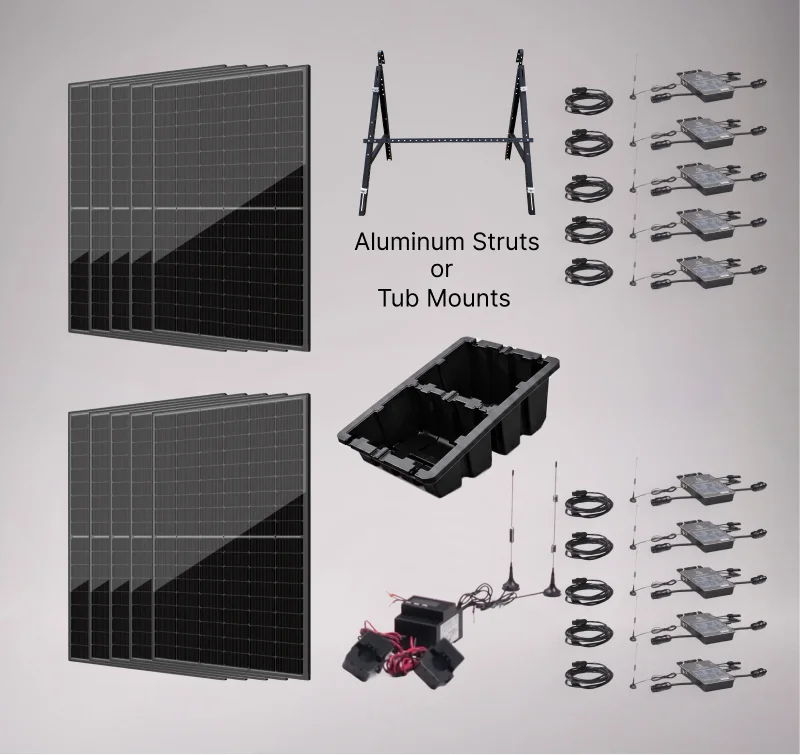
4,450 W Pro Kit
$9,700
Our most powerful plug-in solar kit.
Not sure what fits your home? Find My Kit
Why plug-in solar
CraftStrom in the News









Why you need it
Whatever has stopped you so far, there is a plug-in answer.
Renters and apartment dwellers
Lightweight panels you take with you when you move. Load Guard connects at the in-unit breaker panel most modern apartments have, so just ask your landlord.
Rule-followers
Smart Load Guard power meter, tested by Lawrence Berkeley National Lab.
Homeowners priced out of rooftop
Kits from $1,500. No contracts.
High-bill households
The app shows production per panel, every day.
DIYers and tinkerers
“About as difficult/easy as an Ikea bookshelf.” – Steve, CA. Plus step-by-step how-to videos.
Outage worriers
Solar + battery kit with an off-grid inverter.
Plug-in vs. rooftop
Rooftop solar saves more in total dollars. Plug-in wins on cost to start and risk: a 4,000 W CraftStrom Eco-Line setup costs about a quarter of an average rooftop system and can offset up to 70% of your bill, with no contract and no roof work.
| Compare | CraftStrom 4,000 W Eco-Line | Typical rooftop system |
|---|---|---|
| Upfront cost | $7,500 (2 × 2000 W kits) | $29,000 to $40,000 for an average 12 kW system, before incentives |
| Federal tax credit | None | None for systems bought in 2026 |
| Share of an average bill offset | Up to 70% | Most or all of it |
| Install | DIY in an afternoon | Installer, 1 to 3 days, plus permits and utility approval |
| Commitment | None; take it with you | Fixed to the roof; often financed or leased |
What a 4,000 W setup can save in California
A 4,000 W Eco-Line setup makes about 7,000 kWh a year in California. At rates of 35–50¢/kWh, with the power used at home, that is worth this much. Your savings depend on your sun, your site, your rate and using the power during the day.
Estimate my savingsConservative · 35¢/kWh
about $205
a month · about $2,450 a year
Typical · 40¢/kWh
about $235
a month · about $2,800 a year
High rate · 50¢/kWh
about $290
a month · about $3,500 a year
Customer reviews
★★★★★
I've been interested in plug and play solar for a few years now and when Craftstrom came out with their system I was happy to purchase a 2000 watt set-up. No utility involvement, no permits required, just a DIY installation. I'm really pleased with how it turned out and the production we're already getting. I'm trying to block as much of the heat that comes through the polycarbonate roof while also generating power so it is a mix of expectations.
Chris · CA
★★★★★
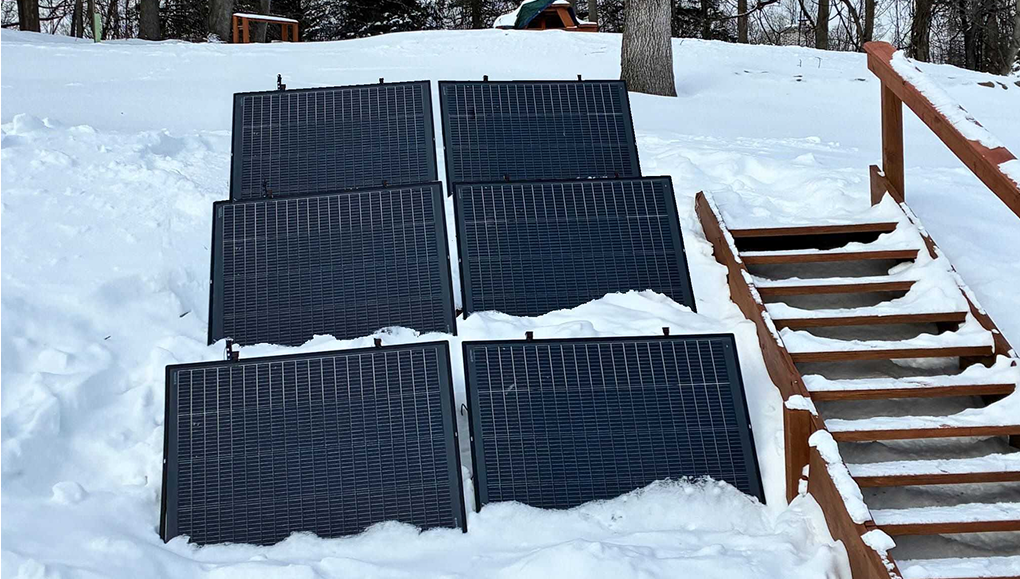
I have been interested in solar for a long time. I looked at roof mounted systems, and they are expensive. And even though I can DIY, I was intimidated by the installation of inverters, switching equipment, and working with the utility. Then I discovered balcony solar and Craftstrom. I purchased the six panel system; I had some issues with my WIFI during installation, and the support from Craftstrom was excellent! Overall it was very easy to install, and is a great “point of entry” system for anyone interested in solar. And yes, it works surprisingly well in snow thanks to the bifacial panels!
Dave · PA

★★★★★
Buying my solar system from Craftstrom was a phenomenal experience! Ken, helped me purchase the system that best met my needs, and kept me informed throughout the product delivery process. Craftstrom’s technical support team way exceeded my expectations and assured that my solar system installation was successful. I absolutely would recommend calling Craftstrom if you are interested in buying a solar power system for your apartment, home or business.
David & Linda · AL

★★★★★
We wanted solar energy but couldn’t afford it. Our Craftstrom balcony solar kit allows us to generate electricity at a fraction of the cost of a traditional solar installation, with minimal permitting and no grid interconnection agreement required!
Mary · TN
★★★★★
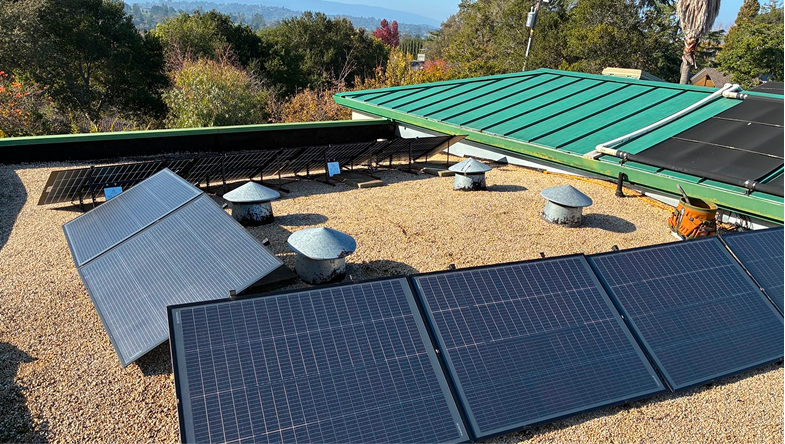
Craftstrom makes clean energy cheap and easy. No permitting. No electricians. But note that some assembly is required! About as difficult/easy as an Ikea bookshelf. We occasionally get big winds, so I used some concrete blocks as ballast to keep the panels on the roof. The app tells me how much I'm generating each day, from each of the panels. Easy peasy.
Steve · CA
★★★★★
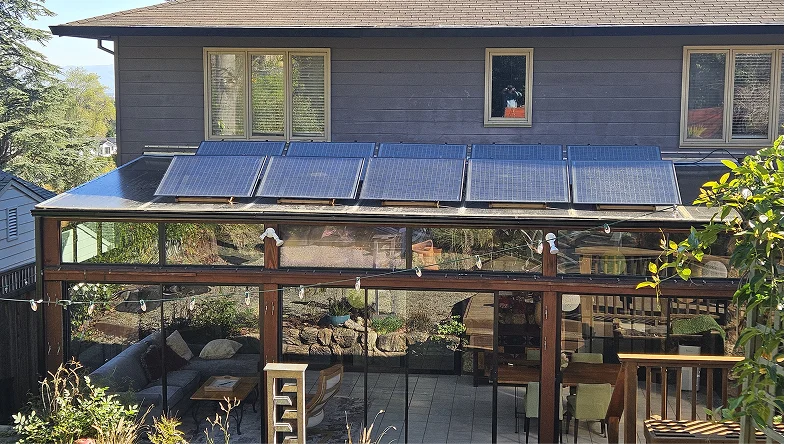
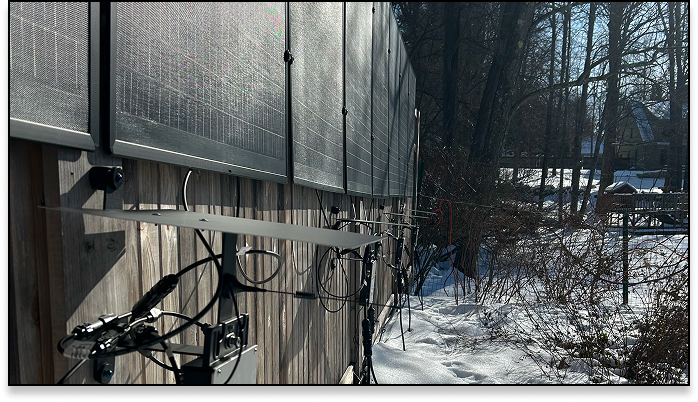
I was looking for an innovative solar system for several years. I wanted DIY because no solar installers in my area are willing to do ground mount or vertical mount. I did not want a roof mount system because they are harder to maintain for a home owner DIY. Craftstrom kits are easy to install and are flexible you can install them the way you want. Also the panels are very light compared to the thick aluminum panels are much easier to handle. An array like the picture below (my array) was installed in an afternoon assuming you have a dedicated plug or the safety plug module which I did. Thanks Craftstrom!!
Andre · MA
How it works
A plug-in solar system makes electricity from sunlight and feeds it into your home through a standard outlet. To do that safely and legally in the U.S., it needs more than panels.
Turn sunlight into DC (direct current) power.
Converts DC power into the AC (alternating current) power your appliances use, with safety features built into the inverter itself.
Measures your home's electricity use and manages solar output to help keep your home and circuits safe.
Certified solar and AC cables designed to connect the system safely to your outlet.
Optional. Stores extra solar power so you can use it in the evening or whenever you need it, instead of turning solar output down.
Grow with you
You do not need to make a large rooftop-solar decision to get started. Start with a system that fits your current space and daytime electricity needs. Then, as you see production in the app, explore adding compatible panels, solar capacity, or optional battery storage.
800W
Designed for a household that wants to offset steady daytime use, such as a refrigerator, Wi-Fi router, phone charging, and laptop use while the sun is out.
1200W
Designed for a household that wants to offset steady loads plus a home office, TV, LED lighting, and other daytime electricity use.
1600W
Designed for households with higher daytime use, such as additional appliances or limited daytime cooling loads.
These examples describe daytime electricity offset while solar is producing. They do not mean the system will run these appliances during a grid outage.
Why CraftStrom
Traditional rooftop solar is not the right fit for every household. It can require roof work, long sales cycles, large projects, and decisions that do not work for renters or people who want a more flexible option. CraftStrom gives households another way to get started.
Choose a system that fits your current goals, then expand as your needs change.
Get the core equipment in one system: panels, microinverters, mounts, app access, and Load Guard.
Use the CraftStrom app to follow system status and solar production.
Speak with a knowledgeable U.S. support team before you buy, while you set up, and after your system is running.
Only at CraftStrom
CraftStrom Load Guard is the smart control device included with your CraftStrom system. It measures how much electricity your home is using and helps the system adjust solar output to match. That gives you more control than a basic panel-and-inverter bundle that produces at a fixed level whenever the sun is out.
Load Guard helps your plug-in solar system stay within the limits of the circuit it uses.
Load Guard helps your system make power for your home, not excess power for the grid.
Solar panels alone are designed to offset electricity use while the grid is operating. They should not be assumed to power your home during a grid outage.
For essential-load backup, choose a compatible CraftStrom battery configuration that is specifically documented for that purpose. Battery capability, installation requirements, and outage behavior depend on the exact equipment and approved system design.
CraftStrom can fit many homes, apartments, and outdoor spaces, but every location is different. Before choosing a kit, consider:
Smart battery storage
Load Shifter is the CraftStrom smart battery. It stores the solar power your home can't use right away and gives it back when you need it, like in the evening after the sun goes down. It plugs into a standard outlet and works together with Load Guard and the CraftStrom app.
When your panels make more power than your home is using, Load Shifter stores the extra energy instead of Load Guard turning solar output down.
Load Shifter gives that energy back later, in the evening or at the times you choose, so more of your own solar power is used in your home.
Solar panels make the most power in the middle of the day, but many homes use the most electricity in the morning and evening. Load Shifter moves your solar energy from the time it is made to the time you need it.
When your panels make more than your home needs, Load Guard sees the extra power and Load Shifter charges with it.
When the sun goes down and your panels slow down, Load Shifter supplies stored solar energy to your home through the same outlet.
In the CraftStrom app, choose charge or discharge mode, the days of the week, and the times of day that fit your routine.
Start with the storage you need today and add more later. Load Shifter is modular, so your battery can grow with your solar system.
Each battery tower stores about 1 kWh. Connect up to four towers to one Smart Base for up to 4 kWh of storage.
The Smart Base charges and discharges your batteries from a standard outlet and connects them to the CraftStrom app over Wi-Fi.
Run time depends on what you plug in. As a guide:
CraftStrom app
The CraftStrom app helps you follow your system after setup. Depending on your configuration, you can review:
The app gives you a clearer view of how your system is performing over time and helps you decide whether expanding your system may make sense.
Compare
Some plug-in products are sold as a panel-and-inverter bundle, but that's not all that is legally required or needed. A complete household system may also need suitable mounting, compatible cabling, system monitoring, output management, app visibility, and a clear U.S.-based support path.
| What to compare | CraftStrom Eco-Line | Typical component-led or marketplace kit |
|---|---|---|
| System scope | Configured solar system with support | Often a panel-and-inverter starting point |
| Panels and mounting | Panel and mounting options matched to the intended location | Often one fixed option, limited mounting, or separate purchases |
| Cabling and connection equipment | Included for the selected configuration | May be limited, sold separately, or require compatibility checks |
| Power monitoring | Load Guard and app visibility | May be absent, display-only, or require added equipment |
| Output management | Can manage solar output based on measured demand in the configured system | Often fixed output; active management must be verified |
| Circuit support | Load Guard can support up to four configured system circuits | Often unavailable or requires separate electrical design |
| Zero-export configuration | Single-phase, two-phase, and cross-phase options may be available where supported by the approved design | Must be verified by exact inverter, meter, software, and installation design |
| Battery path | Optional AC-coupled LiFePO4 battery options | Often separate, unavailable, or dependent on another ecosystem |
| Support | Direct remote technical support from CraftStrom | May be split among a retailer, importer, installer, and multiple manufacturers |
| Real price comparison | Compare the delivered, configured system | Headline pricing may exclude mounting, cabling, monitoring, shipping, or support |
| Component or capability | CraftStrom Eco-Line | EcoFlow | Mango Power | APsystems | Hoymiles |
|---|---|---|---|---|---|
| Complete system approach | Panels, inverter, cabling, mounting options, Load Guard, app, optional battery, and support | Configuration varies by product and bundle | Varies by product line and seller bundle | Component-led inverter platform | Component-led inverter platform |
| Panel and mounting choice | Multiple options matched to the intended space | No choices | Limited choices | Usually selected separately or through a reseller | Usually selected separately or through a reseller |
| Power monitor | Load Guard available as part of the system | Available for single phase | Available for single phase | Requires separate compatible equipment | Requires separate compatible equipment |
| Active output control | Management through Load Guard in a configured system | Available for single phase | Available for single phase | Requires compatible equipment and design | Requires compatible equipment and design |
| Multi-circuit support | Up to four configured system circuits | No | No | No | No |
| Zero-export options | Single-phase, two-phase, and cross-phase options where supported by the approved configuration | Single phase | Dual phase | No | No |
| App monitoring | CraftStrom app for production and system status | EcoFlow app tools vary by configuration | Yes | Depends on inverter and gateway | Depends on inverter and gateway |
| Battery option | Optional AC-coupled LiFePO4 battery system | Battery ecosystem | No | Separate battery ecosystem decision | Separate battery ecosystem decision |
| Support route | One CraftStrom path for the configured system | May be split across manufacturer, retailer, and installer | May be split across manufacturer, seller, and installer | Often distributed across manufacturer, distributor, reseller, and installer | Often distributed across manufacturer, distributor, reseller, and installer |
| Best fit | Customer wanting a coordinated system and direct support | Customer seeking a consumer battery ecosystem | Customer willing to validate complete system controls | Customer comfortable assembling a component-led system | Customer comfortable assembling a component-led system |
← Swipe to see all brands →
Important: Competitor capabilities vary by exact U.S. product model, meter, battery, retailer bundle, software version, and installation design. Confirm the final configuration and local requirements before purchase or installation.
Payment options through Affirm are subject to an eligibility check and may not be available in all states.
Who it's for
Offset part of your daytime electricity use without a conventional rooftop solar project.
A more flexible solar option for renters with an appropriate location and required permission.
Explore smaller-format options where space, property rules, and placement make a system suitable.
A practical solar system for people who want a straightforward, supported setup.
Start with solar or choose an option that includes compatible LiFePO4 battery storage.
Safety, standards & clear limits
CraftStrom systems use certified components and are designed with clear operating limits. Load Guard is part of the system architecture that measures household demand and can support output management in a configured system.
We make the product easier to understand, but we do not hide the limits. A suitable location, proper setup, sunlight, household conditions, and local requirements all matter. Before installation, review the product documentation and verify applicable utility, local authority, landlord, and HOA requirements. A zero-export configuration is a technical operating mode. It does not automatically remove any notification, interconnection, permit, inspection, or approval requirement.
UL 3700 is the new umbrella safety outline for plug-in solar systems. It builds on the certifications our components already carry, like UL 1741 for inverters, and the full standard will take several years to finalize. CraftStrom founder and CEO Stephan Scherer sits on the UL Technical Committees for UL 3700 and UL 1741, working on the foundation of the U.S. plug-in solar market.
Plug-in solar is a practical way to start using solar power without waiting for a full rooftop project. CraftStrom gives you a complete, supported system that you can set up in a suitable sunny space and monitor from your phone.
Panels, microinverters, cabling, mounting options, Load Guard, app access, and optional storage.
Start without roof penetration, a conventional installer timeline, or a long-term solar contract.
CraftStrom kits are available to customers in all 50 states.
The sooner your system is producing, the sooner it can help offset part of your daytime electricity use. Results vary by sunlight, placement, shading, system size, energy use, and local electricity rates.
Start with the system that fits today, then add compatible solar capacity or battery storage as your needs change.
Get clear, practical help from the CraftStrom team.
Call: (832) 850-3832 · Email: [email protected]
FAQ
Most homes use a standard outdoor or indoor outlet on a circuit without heavy loads. Load Guard watches your home's use and turns output down to stay within the safe circuit limit. Run our 5-point outlet check before you buy.
Tell us your bill and we'll show three numbers: conservative, typical and best-case. Savings come from using the power at home during the day.
Anywhere with 4+ hours of direct sun near an outlet: balcony, fence, deck, porch, shed or yard. The kit finder asks about your spot and cable run.
Solar alone lowers your bill but doesn't power your home when the grid is down. Add a battery kit to keep essentials like the fridge, lights and Wi-Fi running.
Yes. CraftStrom works in all 50 states. Load Guard keeps every watt in your home, so nothing flows back to the grid.
Your home uses solar first. If you're making more than you use, Load Guard turns the panels down, or a battery stores it for later.
See your full price, shipping and delivery window before checkout. No surprise accessories.
Yes. It unplugs and moves with you, and it works in all 50 states.
UL-certified inverters, NEC compliant, tested by Lawrence Berkeley National Lab and NREL, with warranties of up to 20 years.
Our Houston team can walk you through Load Guard setup or Wi-Fi by appointment, and our FAQ covers the rest. Call (832) 850-3832.
More questions? Call (832) 850-3832 or email us.