

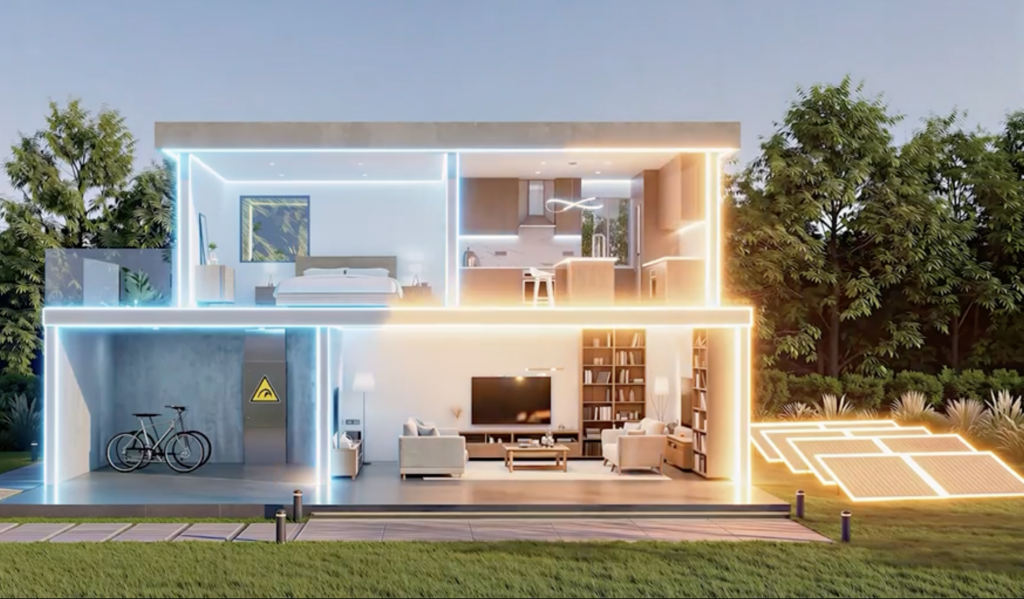
If you are hearing more about plug-in solar, here is the simple version: it is a small solar system (typically 400 – 2400W) designed to help power part of your home during the day by feeding solar power directly into an outdoor outlet. Some people also call it balcony solar, but in the U.S. the clearer term is usually plug-in solar.
For many households, plug-in solar feels much simpler than traditional rooftop solar. There is less hassle, lower upfront cost, and no need to turn your home into a construction project. And it’s much cheaper than the average rooftop solar installation. That is why more homeowners, renters, condo residents, and older adults are paying attention to it.
What is plug-in solar?
Plug-in solar is a consumer-scale solar setup that connects to your home through a standard outdoor outlet and helps offset part of your daytime electric use – with batteries also part of your nighttime use.
People like it because it can be:
- cheaper – hundreds to thousands of Dollars, rather than tens of thousands
- easier to understand
- easier to install
- easier to move with your home
- easier to start small and scale with your household
It is especially appealing if you want lower electric bills without a major renovation.
Is plug-in solar legal?
The honest answer is: yes, but you need to check the right things.
When people ask whether plug-in solar is “legal,” they are usually mixing together four separate questions:
- National Electric Code Rules
Yes, the NEC allows for plug-in solar! There are two versions it allows:
1.a. On a “dedicated circuit”: This means you have an outdoor outlet, which connects directly to a breaker in your breaker box – without any other outlets on that circuit. If you aren’t sure, if you have such a dedicated outlet: Call an electrician! Better safe than sorry.
1.b. On a regular “branch circuit”: These are you standard circuits throughout the house, with your indoor outlets, lights, fridge, etc. In that case, the NEC says you need certain circuit protection devices. In CraftStrom’s case, we have two solutions. The PowerMeter and the NEC Smart Breaker. They are two different technologies with the same purpose: Protect your home.
IN BOTH CASES: Ensure that the products are certified to these two important standards: UL 1741 and IEEE 1547. These two ensure your solar system is also safe for anyone working on the grid (line-worker safety) - State rules
Does your state already recognize plug-in solar, or is legislation still pending? This usually concerns more the interconnection side of solar installations, HOAs, liability questions, etc. - Utility rules
In case your State has no law on plug-in solar, then you can still install plug-in solar, but you will have to talk to your utility. CraftStrom systems typically run as zero-export, meaning they ensure you do not send power back to the grid. - Local enforcement
Does your city or county inspector require anything for your type of setup? If you plan to install your system on a roof, then building permits may be required. That’s typically the major permitting question. Most of our customers use our solar panel stands to mount them on a fence or stand them in the garden. - Property rules
If you rent or live in an HOA or condo, are there rules about placement, wiring, or visible equipment? This is actually the biggest barrier to renters or condo-owners. CraftStrom has been offering light-weight, thin panels since 2019 for exactly that reason. Those are much safer, since they weigh only 8 lbs, vs. 40+ lbs.
That is why we recommend starting with our state legislation tracker and then checking your local utility and property rules before you buy.
Read Next:
- Legislation Tracker
- Do I need an interconnection agreement?
- Do I need special permissions?
- Can my landlord or HOA stop me? (coming, but new laws are saying no)
Is plug-in solar safe?
It is safe when the system is designed for U.S. use, properly controlled, and used as intended.
This is where many consumers get confused. There are really two different issues:
- Home electrical safety: This is where CraftStrom excels with its US-designed systems
- Utility/grid export rules: Utilities need to know where power-generation tech is deployed, so they can manage the distributions grid (We will dive deeper into this topic in a separate post)
Those are not the same thing.
A safe plug-in solar setup should be designed to control how power behaves in the home. Consumers should also look for clear documentation, recognized testing/certification information, and plain-English installation guidance.
In simple terms: cheap and unclear is risky; controlled and well-documented is better.
Read Next:
- What does “Zero-Export” mean?
- Is plug-in solar safe?
- What to check before you buy
Do I need a permit or an interconnection agreement?
Sometimes no. Sometimes yes. It depends on where you live and how the system is designed. 34 States have legislation or are working on it, specifically for plug-in solar. We’re working hard on getting to 50.
That may sound frustrating, but it is better to be clear than to overpromise.
Before you buy, ask:
- Does my State have legislation ready or in the works? This might help with utilities.
- Does my utility want notice or registration? They will, even with legislation, at least require a simple registration.
- Does my city or county require anything? Permitting rules are defined by them. Avoid installing on your roof, if possible.
- If I rent or live in an HOA, what are the placement rules? Legislative efforts are actually working on this issue.
- Does the manufacturer explain safety and compliance in plain English? Do they have people in the US you can always reach for advice? Avoid cheap inverters from China, they have been known to either fail or even not include safety features required in the US. Your home is worth a lot more than the small savings.
If a seller cannot explain those points clearly, that is a warning sign.
How much can plug-in solar lower my bill?
At CraftStrom we receive regular reports from customers with stories about offsetting large parts of their electricity use – up to 75% without A/C use. It depends on a few simple factors:
- how much sun you get
- where the panels are placed
- how much electricity you use during the day
- the size of the system
- whether you add storage
The goal is usually to offset part of your bill, not eliminate it. For most households, the best results come when solar production matches daytime use.
Is plug-in solar good for renters, condos, and smaller homes?
Yes! That’s large part of our clientele and one of the main reasons interest is growing.
Plug-in solar can make sense for people who:
- do not want roof work
- don’t want to take on a 20 year loan
- may move later
- want a simpler entry point into solar
- live in smaller homes or use only part of their daily power during daylight hours
But property rules still matter. If you rent or live in a condo or HOA, check placement and visibility rules first. For renters it’s typically hardest, since they need to get permission from their landlord/landlady.
Where can I check the latest state rules on plug-in solar?
Start with our Plug-In Solar Legislation Tracker. We update it regularly to show:
- which states already have legislation
- which states are actively working on legislation
- which bills matter most
- links to official state sources
Because this area changes quickly, always check the “last updated” date.
Bottom line
Plug-in solar can be a simple way to lower electric bills and get more control over your energy use. But simple should never mean vague.
The smart approach is:
- understand the basic rules
- choose a system built for safe, predictable use – start small, you can always upgrade
- check your state, utility, and property situation
If you want help understanding what applies to your home, contact us with your ZIP code, utility, and housing type and we’ll point you to the next step.
I hope this has helped you take your first steps. Please do contact us, if you have any questions. You can reach us via our contact page.
Stephan Scherer
CEO & Founder